Vaccination: The Numbers That Save Lives
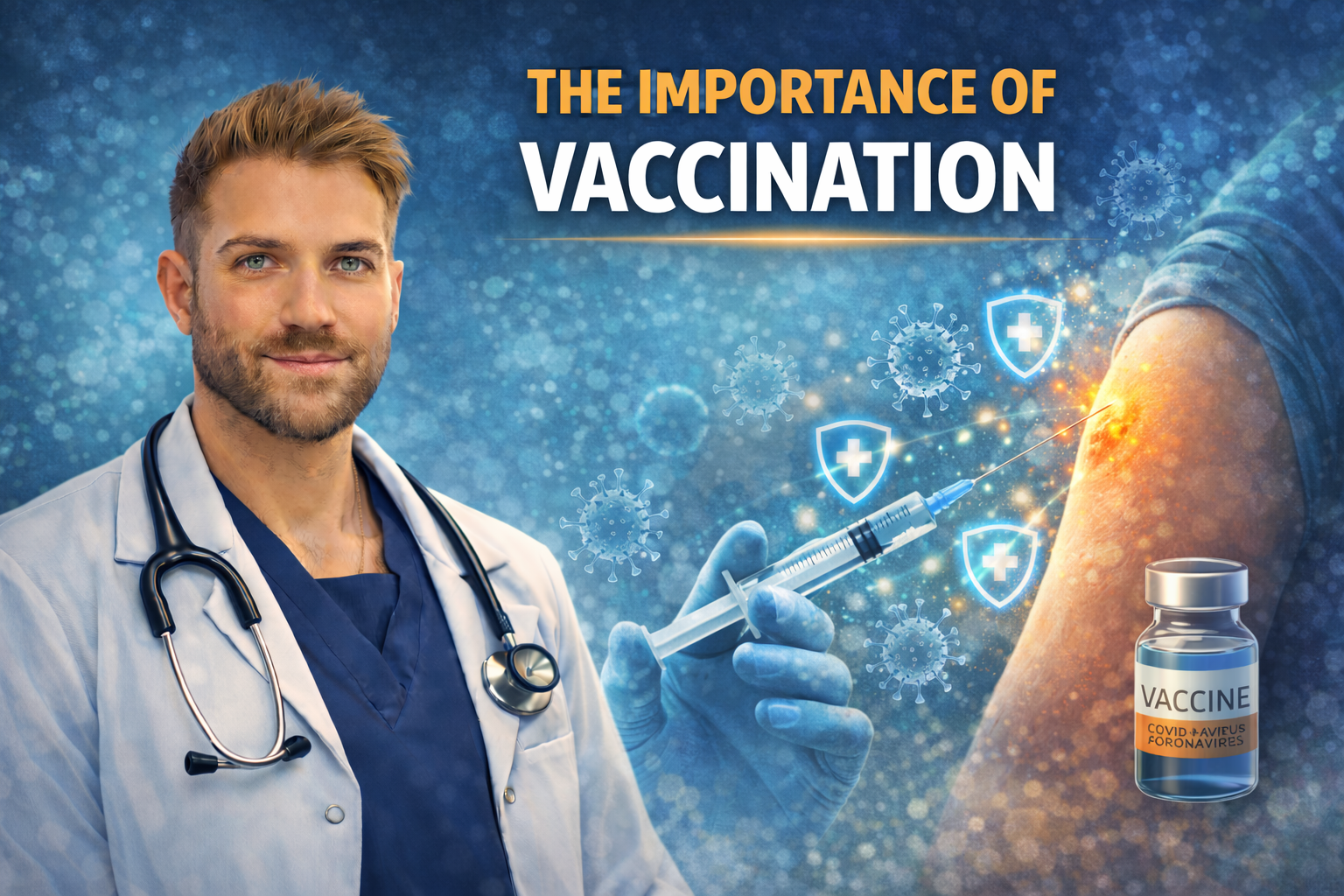
Why Get Vaccinated? The Facts That Save Lives
Vaccination is one of the greatest achievements of modern medicine. Here are the concrete facts that demonstrate its importance for you and your loved ones.
Millions of Lives Saved
Since 1974, vaccination programs have prevented 154 million deaths worldwide, including 146 million children under 5 years old.[1] This represents more than 3 million lives saved each year. For every life saved, an average of 66 years of full health were gained.[1]
In the United States alone, vaccination prevents more than 24 million cases of vaccine-preventable diseases each year.[2] Between 2000 and 2019, vaccination reduced deaths from targeted diseases by 45%, and by 57% in children under 5 years old.[3]
Spectacular Protection Against Diseases
The results of vaccination are impressive:
- Diphtheria: 100% reduction in cases
- Measles: 99.9% reduction in cases
- Polio: 100% reduction (disease eliminated)
- Rubella: 99.9% reduction in cases
- Pertussis (whooping cough): 92% reduction in cases
- Tetanus: 99% reduction in deaths[4]
Measles vaccination alone has saved 94 million lives over the past 50 years, representing 60% of all lives saved by vaccination.[1]
Proven Safety
Vaccines are among the most closely monitored medical products. Serious side effects are extremely rare:
- Severe allergic reaction (anaphylaxis): 1 case per 1 million doses[5]
- Febrile seizures after MMR vaccine: 4 cases per 100,000 doses[5]
- Guillain-Barré syndrome after flu vaccine: 1 to 3 cases per 1 million doses[5]
Scientific studies have clearly demonstrated that there is no link between vaccines and autism, diabetes, or sudden infant death syndrome.[5][6][7]
A Worthwhile Investment for Society
For every dollar invested in childhood vaccination, society saves $10 in medical costs and lost productivity.[8] In the United States, the vaccination program for children born between 1994 and 2023 will save $2.7 trillion to society.[9]
For children born in 2017, vaccination will prevent more than 17 million cases of disease and 31,000 deaths, while saving $55 billion.[10]
Collective Protection: You Also Protect Others
When enough people are vaccinated (generally 90-95% of the population), this creates "herd immunity" that also protects people who cannot be vaccinated: newborns, immunocompromised individuals, or those with medical contraindications.[11-13]
In Summary
Vaccination:Saves millions of lives each year.
Has reduced most targeted diseases by more than 90%
Has an excellent safety profile with extremely rare serious side effects
Protects not only you, but also those around you
Represents a very cost-effective economic investment for society
Getting vaccinated means choosing protection for yourself and for others. The numbers speak for themselves: vaccination works.
Written by Dr Michael Roger
Family Medicine Consultant
References
Contribution of Vaccination to Improved Survival and Health: Modelling 50 Years of the Expanded Programme on Immunization. Shattock AJ, Johnson HC, Sim SY, et al. Lancet (London, England). 2024;403(10441):2307-2316. doi:10.1016/S0140-6736(24)00850-X.
Impact of Routine Childhood Immunization in Reducing Vaccine-Preventable Diseases in the United States. Talbird SE, Carrico J, La EM, et al. Pediatrics. 2022;150(3):e2021056013. doi:10.1542/peds.2021-056013.
Estimating the Health Impact of Vaccination Against Ten Pathogens in 98 Low-Income and Middle-Income Countries From 2000 to 2030: A Modelling Study. Li X, Mukandavire C, Cucunubá ZM, et al. Lancet (London, England). 2021;397(10272):398-408. doi:10.1016/S0140-6736(20)32657-X.
Historical Comparisons of Morbidity and Mortality for Vaccine-Preventable Diseases in the United States. Roush SW, Murphy TV, Vaccine-Preventable Disease Table Working Group. JAMA. 2007;298(18):2155-63. doi:10.1001/jama.298.18.2155.
The State of Vaccine Safety Science: Systematic Reviews of the Evidence. Dudley MZ, Halsey NA, Omer SB, et al. The Lancet. Infectious Diseases. 2020;20(5):e80-e89. doi:10.1016/S1473-3099(20)30130-4.
Strategies for Improving Vaccine Communication and Uptake. O'Leary ST, Opel DJ, Cataldi JR, Hackell JM. Pediatrics. 2024;:e2023065483. doi:10.1542/peds.2023-065483.
Safety of Vaccines Used for Routine Immunization in the United States: An Updated Systematic Review and Meta-Analysis. Gidengil C, Goetz MB, Newberry S, et al. Vaccine. 2021;39(28):3696-3716. doi:10.1016/j.vaccine.2021.03.079.
Economic Evaluation of the Routine Childhood Immunization Program in the United States, 2009. Zhou F, Shefer A, Wenger J, et al. Pediatrics. 2014;133(4):577-85. doi:10.1542/peds.2013-0698.
Health and Economic Benefits of Routine Childhood Immunizations in the Era of the Vaccines for Children Program - United States, 1994-2023. Zhou F, Jatlaoui TC, Leidner AJ, et al. MMWR. Morbidity and Mortality Weekly Report. 2024;73(31):682-685. doi:10.15585/mmwr.mm7331a2.
Value of the Immunization Program for Children in the 2017 US Birth Cohort. Carrico J, La EM, Talbird SE, et al. Pediatrics. 2022;150(3):e2021056007. doi:10.1542/peds.2021-056007.
