How Is an Anxiety Disorder Diagnosed?
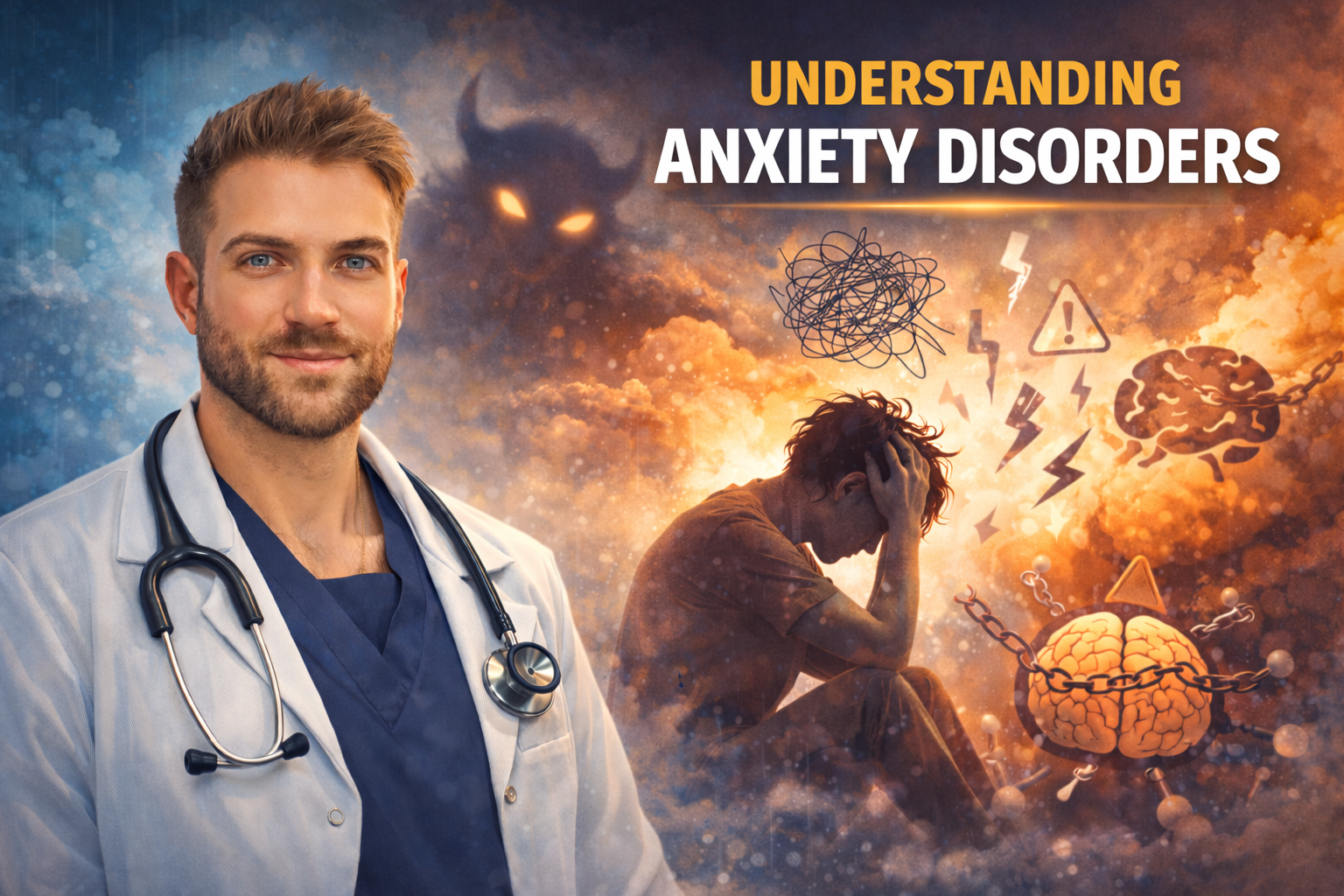
What Is an Anxiety Disorder?
Everyone experiences anxiety from time to time—it's a normal reaction to stress. However, an anxiety disorder is different. It's characterized by excessive and persistent anxiety that interferes with your daily life, work, relationships, or activities.[1][2]
Anxiety disorders manifest through psychological symptoms like constant worry, nervousness, and fear, but also through physical symptoms such as heart palpitations, shortness of breath, dizziness, and muscle tension.[1]
How Do Doctors Distinguish Normal Anxiety from Pathological Anxiety?
Your doctor evaluates several key elements to determine whether your anxiety requires treatment:[1]
- Severity: How intense are your symptoms?
- Frequency: Do you experience these symptoms most days?
- Persistence: Have these symptoms lasted for several weeks or months?
- Impact on your life: Do your symptoms prevent you from functioning normally at work, in relationships, or in daily activities?
If your symptoms are intense, frequent, persistent, and significantly disrupt your life, you may have an anxiety disorder that requires treatment.
Screening Questionnaires
To facilitate diagnosis, your doctor may ask you to complete a simple questionnaire. The most commonly used are:[2][3][1]
- The GAD-7 (7-item Generalized Anxiety Disorder questionnaire): This questionnaire takes less than 5 minutes to complete. It asks questions about your symptoms over the past two weeks. A score of 10 or higher suggests the possible presence of an anxiety disorder.[1][4]
* The GAD-2 (2-item short version): This ultra-short version can serve as a quick initial screening tool.[3][4]
It's important to understand that a high score on these questionnaires doesn't automatically mean you have an anxiety disorder. These tools simply help your doctor identify people who might benefit from a more thorough evaluation.[2][1]
The Complete Diagnostic Evaluation
If your questionnaire suggests a possible anxiety disorder, your doctor will conduct a more detailed evaluation that includes:[1]
- An in-depth interview to discuss your symptoms, their duration, and their impact on your daily life.
- Questions about your general health to ensure your symptoms aren't caused by a medical condition (such as thyroid or heart problems) or medications.[1]
- An assessment of your overall mental health, as anxiety is often associated with other conditions like depression.[1]
- Questions about your alcohol or substance use, as some people use these substances to manage their anxiety.[1]
Main Types of Anxiety Disorders
Your doctor will try to identify the specific type of anxiety disorder, as this influences treatment. The most common are:[1][2][5]
- Generalized anxiety disorder: Excessive and difficult-to-control worry about many aspects of daily life, present most days for at least 6 months.[5][1]
- Panic disorder: Sudden and intense panic attacks with marked physical symptoms (palpitations, feeling of suffocation, fear of dying).
- Social anxiety disorder: Intense fear of social situations or performance situations where you might be judged by others.[1]
What Happens After Diagnosis?
If an anxiety disorder is diagnosed, know that effective treatments exist. Your doctor will discuss available options with you, which may include psychotherapy, medications, or a combination of both.
Diagnosis is the first important step toward relief from your symptoms and improvement in your quality of life. Don't hesitate to ask your doctor all your questions and openly share your concerns.
When to Seek Help
You should consult a healthcare professional if:
- Your anxiety interferes with your work, relationships, or daily activities
- You experience physical symptoms like rapid heartbeat, difficulty breathing, or dizziness
- You're using alcohol or drugs to cope with anxiety
- You have thoughts of harming yourself
Remember that anxiety disorders are common and treatable. Seeking help is a sign of strength, not weakness.
Written by Dr Michael Roger
Family Medicine Consultant
References
Anxiety Disorders: A Review. Szuhany KL, Simon NM. JAMA. 2022;328(24):2431-2445. doi:10.1001/jama.2022.22744.
Screening for Anxiety Disorders in Adults: US Preventive Services Task Force Recommendation Statement. US Preventive Services Task Force, Barry MJ, Nicholson WK, et al. JAMA. 2023;329(24):2163-2170. doi:10.1001/jama.2023.9301.
Anxiety Screening: Evidence Report and Systematic Review for the US Preventive Services Task Force. O'Connor EA, Henninger ML, Perdue LA, et al. JAMA. 2023;329(24):2171-2184. doi:10.1001/jama.2023.6369.
Generalized Anxiety Disorder 7-Item (GAD-7) and 2-Item (GAD-2) Scales for Detecting Anxiety Disorders in Adults. Aktürk Z, Hapfelmeier A, Fomenko A, et al. The Cochrane Database of Systematic Reviews. 2025;3:CD015455. doi:10.1002/14651858.CD015455.
Diagnostic and Statistical Manual of Mental Disorders. Dilip V. Jeste, Jeffrey A. Lieberman, David Fassler, et al. American Psychiatric Association (2022).
